How Marketing Automation Is Changing the Future of Digital Marketing
Digital marketing is evolving faster than ever. Businesses today need to reach the right audience, deliver personalized experiences, manage multiple communication channels, and measure campaign performance—all while saving time and resources. This is where marketing automation is becoming a powerful part of modern digital marketing.
Marketing automation uses software, artificial intelligence, customer data, and predefined workflows to automate repetitive marketing activities. From email campaigns and lead nurturing to customer segmentation, social media scheduling, and personalized messaging, automation helps businesses create more consistent and data-driven marketing strategies.
What Is Marketing Automation?
Marketing automation refers to the use of technology to automate repetitive marketing tasks and customer interactions. Instead of manually managing every lead, campaign, email, or follow-up, marketers can create workflows that automatically perform actions based on customer behavior.
For example, when a visitor downloads an e-book from a company website, an automated system can:
- Add the visitor to a relevant audience segment
- Send a confirmation email
- Provide additional educational content
- Track future interactions
- Assign a lead score
- Notify the sales team when the lead becomes highly engaged
This allows marketing teams to focus more on strategy, creativity, and customer relationships rather than repetitive administrative tasks.
Why Is Marketing Automation Becoming Important?
As businesses move more of their operations online, the volume of customer data and interactions continues to increase. Managing these interactions manually can become difficult, particularly for businesses running campaigns across multiple platforms.
Marketing automation can help businesses:
- Save time and reduce repetitive work
- Improve lead management
- Deliver personalized customer experiences
- Maintain consistent communication
- Track customer interactions
- Improve campaign efficiency
- Make better use of marketing data
- Support sales and marketing collaboration
The goal is not simply to automate everything. Effective automation combines technology with a thoughtful marketing strategy.
Personalized Marketing at Scale
One of the biggest changes brought by marketing automation is the ability to personalize communication for large audiences.
Traditional marketing often sends the same message to everyone. Automation allows marketers to divide audiences into different segments based on factors such as:
- Location
- Interests
- Previous purchases
- Website activity
- Email engagement
- Demographic information
- Stage in the buying journey
- Content interactions
For example, an online training institute can create different campaigns for students, working professionals, freelancers, and business owners. Each audience can receive content relevant to its interests and goals.
This creates a more relevant customer experience without requiring marketers to manually create every interaction.
Automated Lead Nurturing
Not every potential customer is ready to make a purchase immediately. Some visitors may need additional information before making a decision.
Marketing automation can help businesses nurture these leads over time.
A typical lead-nurturing workflow could look like:
Website Visit → Content Download → Welcome Email → Educational Content → Product Information → Follow-Up → Sales Interaction
The content and timing can be adjusted based on customer behavior.
For example, if someone repeatedly visits a particular product page, the automation system may place that person into a more relevant campaign. This allows businesses to maintain communication without overwhelming customers with irrelevant messages.
AI and Marketing Automation
Artificial intelligence is adding another layer of capability to marketing automation.
AI-powered marketing systems can analyze large amounts of customer and campaign data and help marketers identify patterns. AI can also assist with content generation, audience segmentation, recommendations, predictive analysis, and customer interactions.
Modern marketing workflows may combine:
- AI-generated content ideas
- Automated email campaigns
- Predictive lead scoring
- Chatbots
- Customer segmentation
- Recommendation systems
- Automated reporting
- Campaign optimization
Generative AI is also changing how marketers create headlines, social media posts, email drafts, ad variations, and other marketing materials.
However, human oversight remains important. AI-generated content should be reviewed for accuracy, brand consistency, originality, and relevance.
The Role of Customer Data
Data is at the center of effective marketing automation.
Every customer interaction can provide useful information, such as:
- Which pages customers visit
- Which emails they open
- Which links they click
- What content they download
- What products they explore
- How frequently they interact with a brand
- Whether they complete a purchase
When this information is organized properly, marketers can use it to create more relevant campaigns.
At the same time, businesses need to handle customer information responsibly. Privacy, consent, security, and applicable data-protection requirements should be considered when designing automated marketing workflows.
Omnichannel Marketing Automation
Customers rarely interact with a business through only one channel. They may discover a brand through Google, visit its website, follow it on social media, receive an email, and eventually contact the company through messaging platforms.
Marketing automation can help coordinate communication across multiple channels.
A business may use automation for:
- Email marketing
- Social media campaigns
- SMS communication
- Website personalization
- Push notifications
- Chatbots
- Paid advertising workflows
- Lead management
The objective is to create a connected customer journey instead of treating every channel as a separate marketing activity.
Automated Customer Journeys
Marketing automation makes it possible to build customer journeys based on specific actions.
For example:
New Visitor
↓
Downloads a Guide
↓
Receives Welcome Email
↓
Views Product Page
↓
Receives Relevant Information
↓
Requests a Demo
↓
Sales Team Receives Notification
↓
Customer Conversion
Each step can trigger the next action automatically.
This type of workflow helps businesses communicate with customers at different stages of their decision-making process.
Marketing Automation and Social Media
Social media management can involve a significant amount of repetitive work. Automation tools can help marketers schedule posts, organize campaigns, monitor engagement, and generate performance reports.
Instead of manually publishing every post, businesses can prepare content calendars and schedule content in advance.
However, social media should not become completely automated. Real-time conversations, comments, customer questions, and trending topics often require human involvement.
Better Lead Scoring
Lead scoring is another important application of marketing automation.
A system can assign scores based on customer interactions. For example:
- Website visit → +5 points
- Content download → +10 points
- Email engagement → +5 points
- Product-page visit → +10 points
- Demo request → +30 points
Once a lead reaches a predefined threshold, the system can notify the sales team.
The exact scoring model should be based on the organization's customer journey and should be regularly reviewed using actual campaign results.
Improved Marketing Analytics
Marketing automation also changes how businesses measure their campaigns.
Instead of looking only at impressions or clicks, marketers can connect different stages of the customer journey and analyze metrics such as:
- Lead generation
- Conversion rates
- Customer acquisition cost
- Email engagement
- Campaign performance
- Customer lifetime value
- Return on marketing investment
- Funnel performance
Automated reporting can bring information from multiple campaigns into centralized dashboards, making it easier for teams to monitor performance.
Marketing Automation and SEO
Marketing automation can also support search engine optimization indirectly.
For example, automation can help marketers:
- Distribute newly published content
- Promote blog posts through email
- Share content on social media
- Track campaign traffic
- Monitor content engagement
- Identify high-performing topics
- Nurture visitors who discover content through search
Automation does not replace SEO fundamentals such as useful content, technical optimization, keyword research, website performance, and authoritative information. Instead, it can help amplify and manage content marketing activities around SEO.
The Future of Marketing Automation
The future of marketing automation is likely to become increasingly intelligent and customer-focused.
AI-powered systems may help businesses understand customer intent more effectively, identify patterns in behavior, and dynamically adjust campaigns.
Future marketing workflows may involve:
Customer Data → AI Analysis → Audience Segmentation → Personalized Content → Automated Delivery → Behavioral Feedback → Continuous Optimization
This creates a feedback loop where campaign data can be used to improve future marketing activities.
Businesses will also need to balance automation with authenticity. Customers may respond poorly when communication feels robotic, excessive, or irrelevant. Successful marketing automation should therefore make interactions more useful rather than simply increasing the number of automated messages.
Human Creativity Still Matters
Automation can handle repetitive processes, but it does not eliminate the need for marketers.
Human marketers remain important for:
- Brand strategy
- Creative storytelling
- Campaign concepts
- Customer understanding
- Ethical decision-making
- Content review
- Strategic planning
- Building genuine relationships
The future of digital marketing is therefore not necessarily human versus automation. It is more accurately humans working with automation and AI.
Benefits for Businesses
When implemented strategically, marketing automation can provide several advantages:
1. Increased Productivity
Marketing teams can spend less time on repetitive tasks.
2. Better Personalization
Customers can receive messages based on their interests and behavior.
3. Faster Follow-Ups
Automated workflows can respond to customer actions quickly.
4. Improved Lead Management
Leads can be categorized, scored, and nurtured systematically.
5. Better Measurement
Campaign performance can be tracked across multiple stages.
6. Scalable Marketing
Businesses can manage larger audiences without increasing manual work at the same rate.
Challenges of Marketing Automation
Despite its advantages, automation also has challenges.
Poorly designed automation can result in:
- Excessive emails or messages
- Irrelevant recommendations
- Poor customer experiences
- Incorrect customer segmentation
- Data-quality problems
- Privacy concerns
- Overdependence on technology
- Lack of human interaction
Therefore, businesses should regularly review automated workflows, analyze customer feedback, update audience segments, and remove unnecessary communication.
How Businesses Can Prepare for the Future
Organizations that want to benefit from marketing automation should start with a clear strategy.
A practical approach is:
- Identify repetitive marketing tasks.
- Define clear business and marketing objectives.
- Organize customer and campaign data.
- Segment audiences appropriately.
- Build simple automation workflows.
- Personalize communication where it adds value.
- Track meaningful performance metrics.
- Test and optimize campaigns.
- Maintain human oversight.
- Review privacy and data-handling practices regularly.
Starting with a few well-designed workflows is often more practical than attempting to automate every marketing activity at once.
Conclusion
Marketing automation is reshaping digital marketing by making campaigns more scalable, personalized, measurable, and efficient. From automated lead nurturing and email campaigns to AI-assisted content creation and predictive customer insights, automation is becoming an important part of modern marketing strategies.
The future will likely involve closer integration between AI, customer data, automation platforms, analytics, content marketing, SEO, social media, and customer relationship management.
Explore Our Courses
Ready to master the skills discussed in this article? Check out our comprehensive course programs designed by industry experts.
Browse Courses →Explore Our Services
Looking to implement these concepts in your organization? Our services team can help you achieve your business goals.
View Services →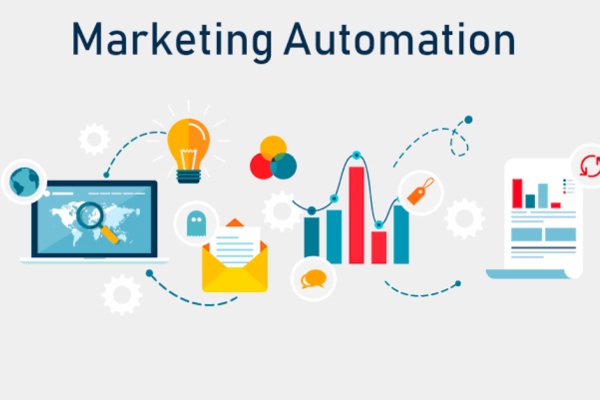


Comments
No comments yet. Be the first to comment!