🚀 Admissions Open for Full Stack Developer (MERN Stack) Training in Bangalore
Full Stack Developer Course in Bangalore
Become a Job-Ready Full Stack Developer with Practical, Project-Based Training
Learn to design, develop, deploy and maintain modern web applications using frontend, backend, databases, APIs and cloud technologies — through hands-on, instructor-led training in Bangalore.
Course Fee: ₹45,500
Curriculum last updated: October 2026
Technologies You'll Master
4-6 months
Program
150+ Hours
Practical Training
6+ Projects
Real-World Development
Classroom + Online
Flexible Learning
Certification
On Completion
Job Assistance
Career Support
Why Learn Full Stack Development?
Modern web applications need developers who understand more than one layer of the stack.
Frontend
Building the interfaces users interact with, using HTML, CSS, JavaScript and React.
Backend
Handling application logic, servers and business rules with Node.js and Express.js.
Databases
Storing and querying application data reliably, with MongoDB.
APIs
Connecting frontend and backend systems, and integrating with external services.
Authentication
Securing applications with login, sessions and role-based access.
Version Control & Deployment
Managing code with Git/GitHub and shipping applications to production.
Why Choose SoftPro9 for Full Stack Development?
Curriculum
The Full Stack Developer Journey
Duration: 4-6 months
01Introduction to Web Development
- HTML5, CSS3, JavaScript fundamentals
- DOM manipulation
- Responsive design with Bootstrap & Flexbox
02Advanced JavaScript
- ES6+ features
- Asynchronous programming
- Debugging & best practices
03Version Control with Git & GitHub
- Commits, branches, merges
- Collaboration workflows
04Node.js & Express.js
- RESTful APIs
- Middleware
- Server configuration
05MongoDB & Mongoose
- CRUD operations
- Aggregation pipelines
- Schema design
06React.js
- Components, props, state
- React hooks
- React Router
- State management with Context API & Redux
07Integration & API Development
- Connecting front-end and back-end
- Authentication with JWT & OAuth
- Axios and React Query
08Advanced MERN Features
- File uploads
- Role-based auth
- Pagination and search
09Deployment & DevOps Basics
- Deployment on Heroku, Netlify, AWS
- CI/CD basics
10Capstone Project
- Real world MERN app development
- E-commerce, Social media, Job portal projects
Real-World Projects
Build Real Projects. Not Just Assignments.
Work on practical, industry-relevant projects that help you build a strong portfolio and gain real development experience.
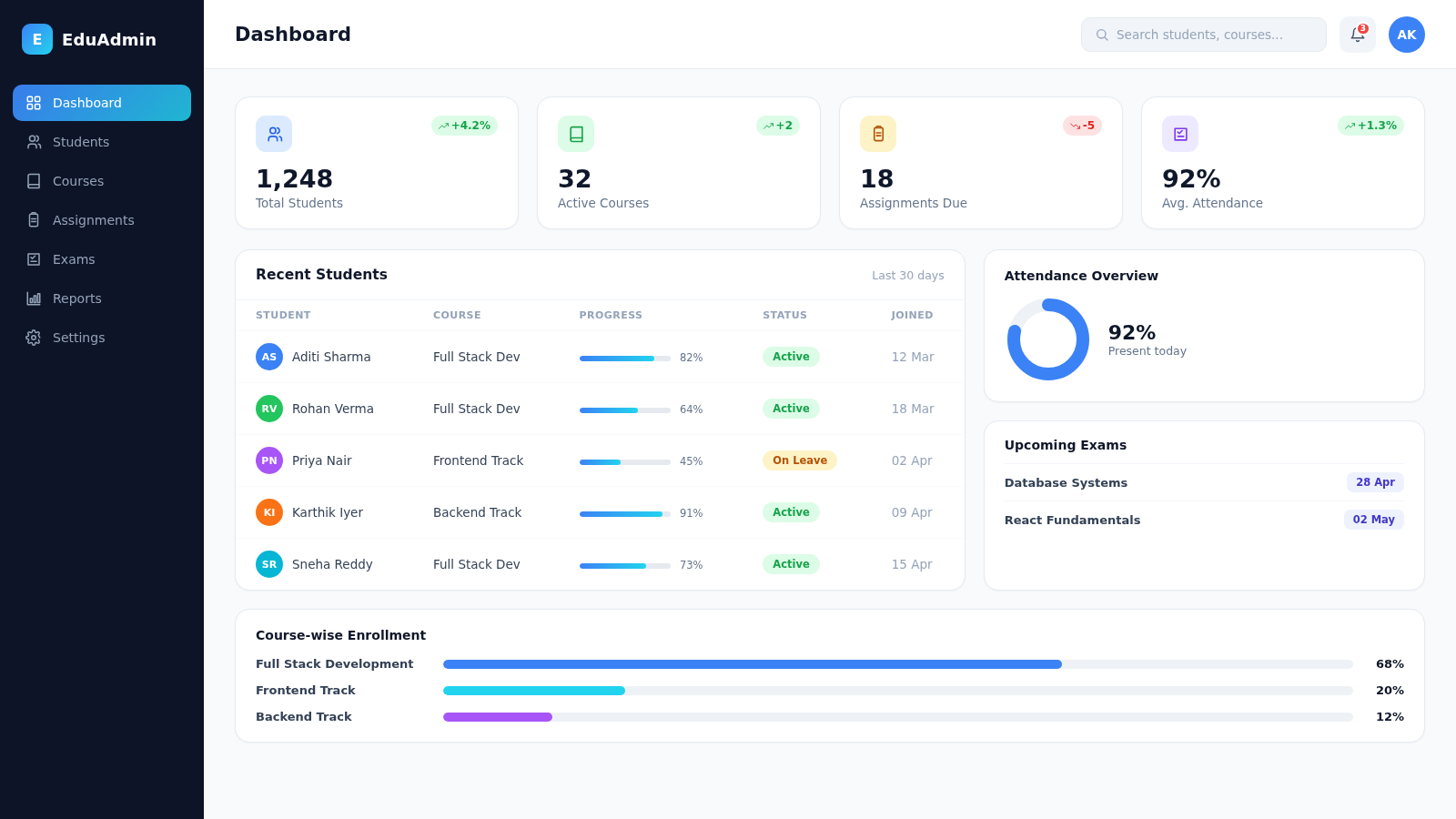
Student Management System
React, Node.js, Express, MongoDB
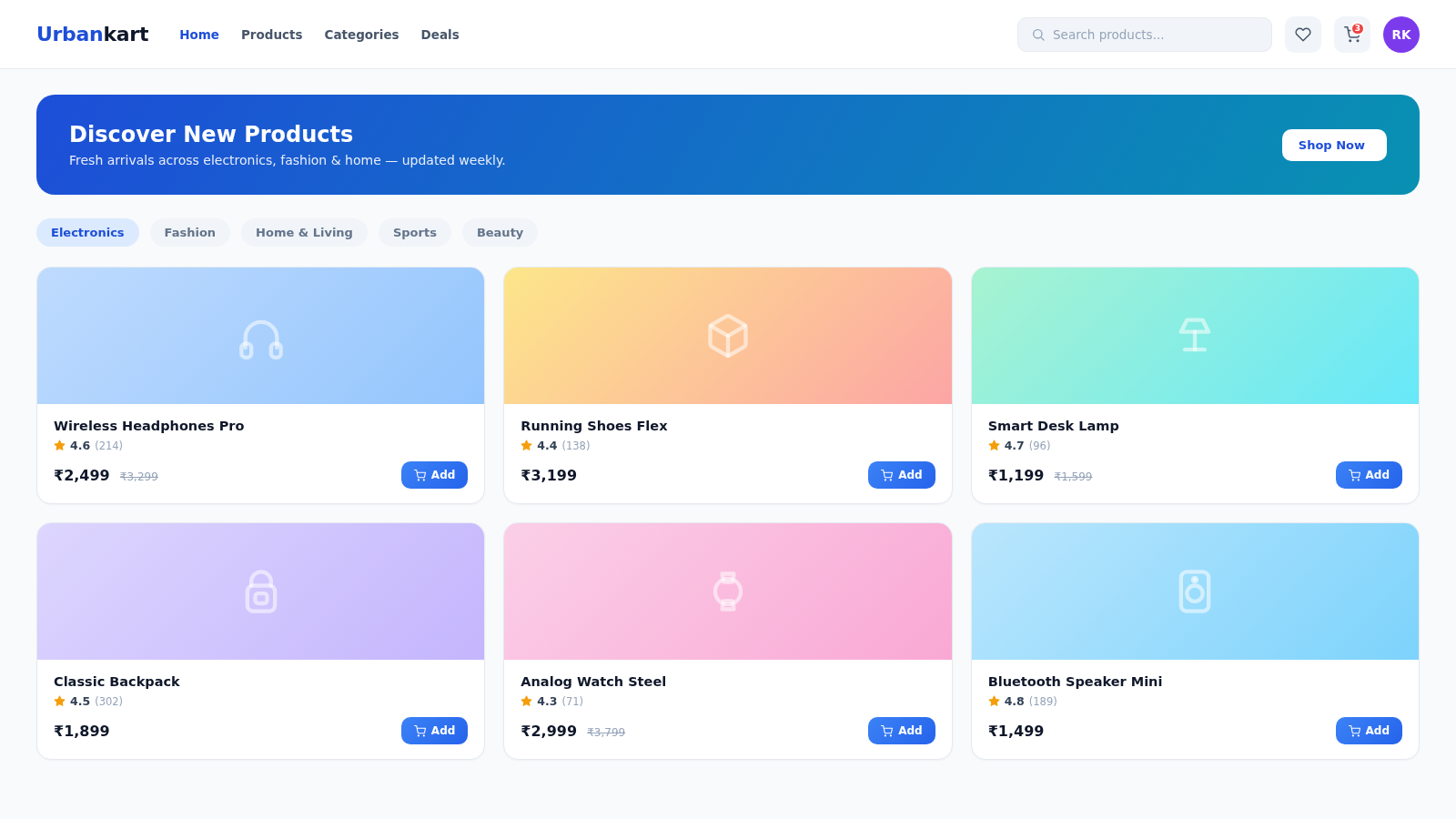
E-Commerce Application
Authentication, Products, Cart, Orders, REST APIs
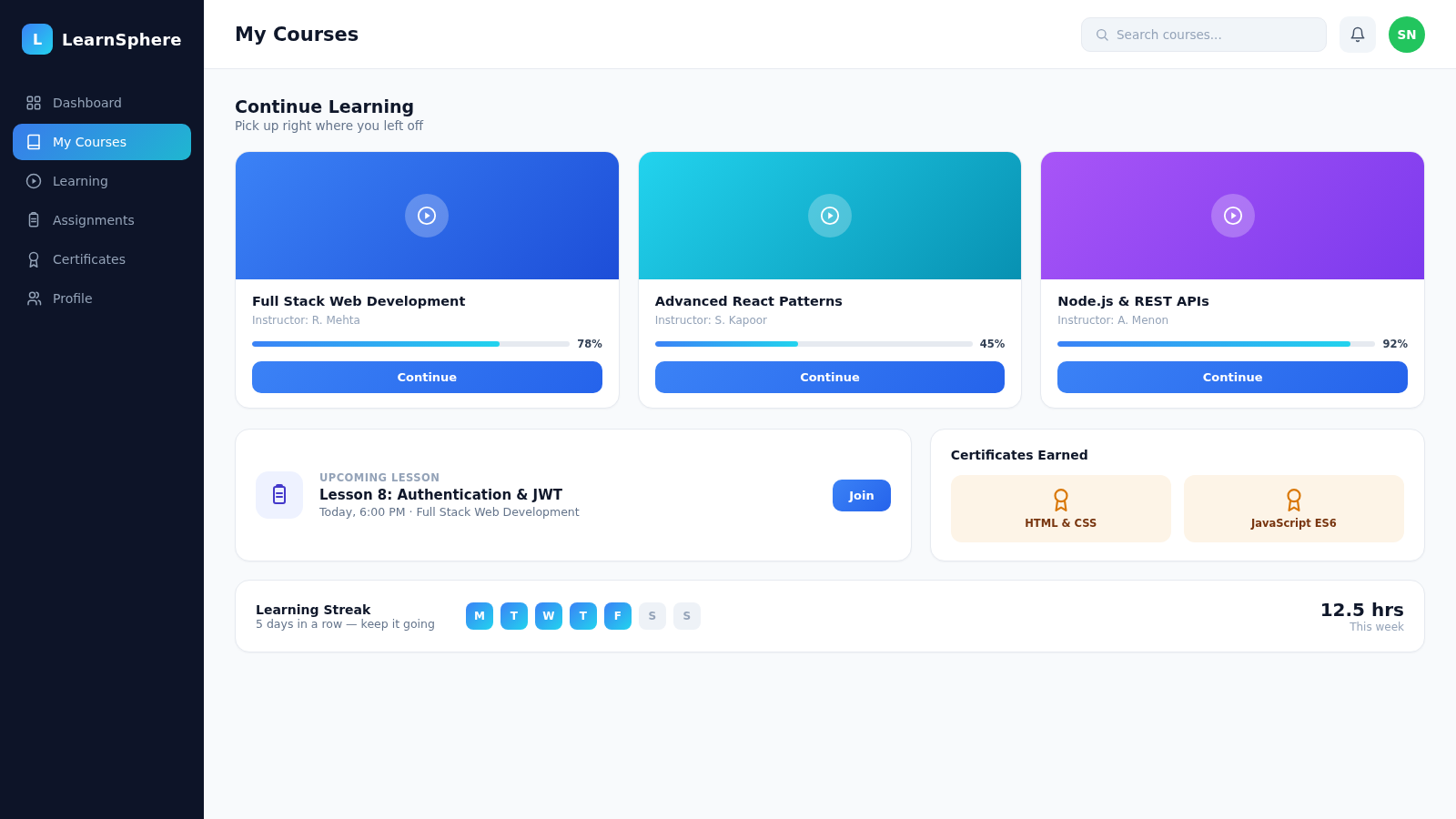
Learning Management System
Courses, Students, Admin, Role-Based Access
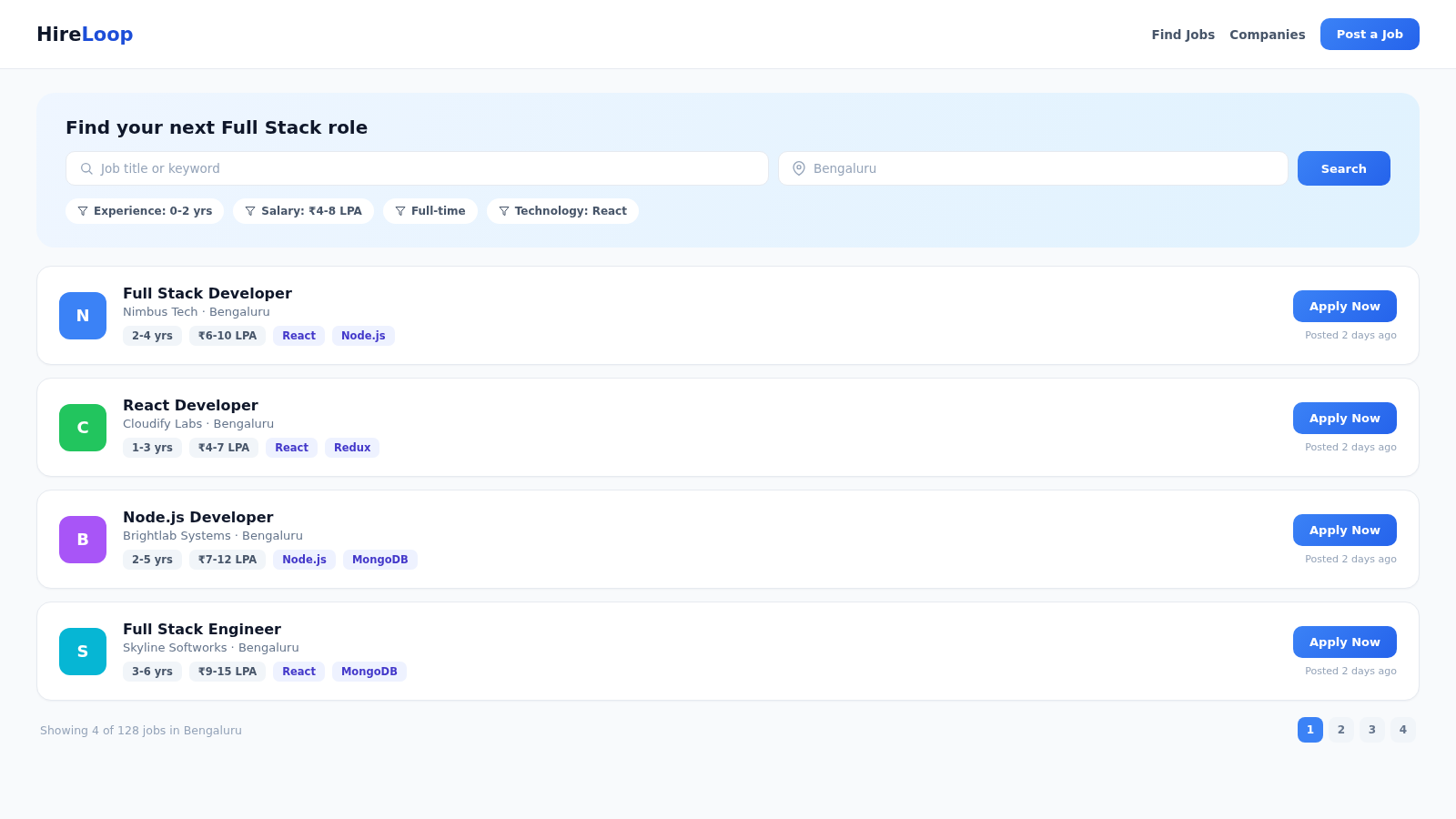
Job Portal
Authentication, Job Listings, Applications
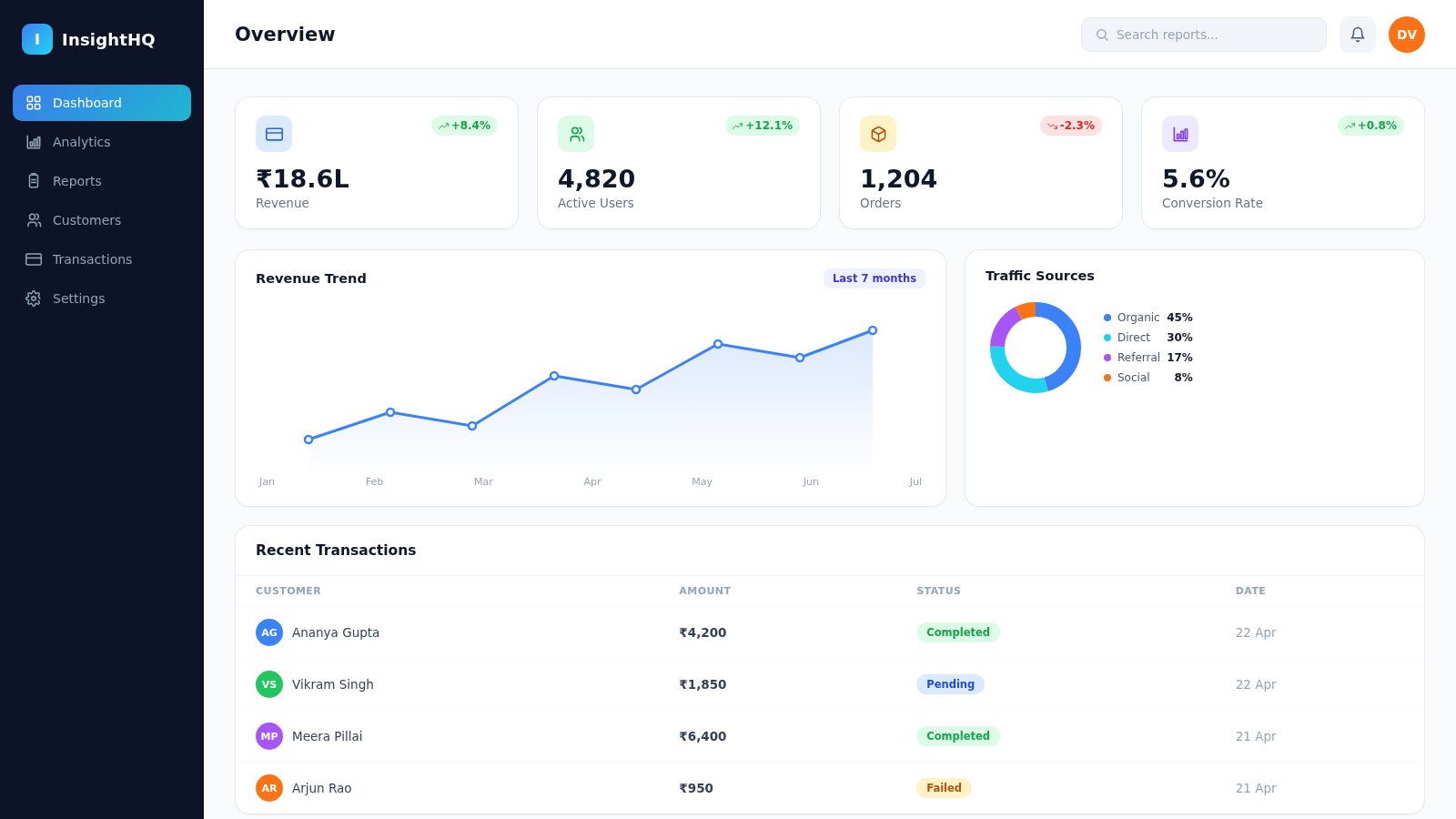
Business Dashboard
React, APIs, Database, Charts
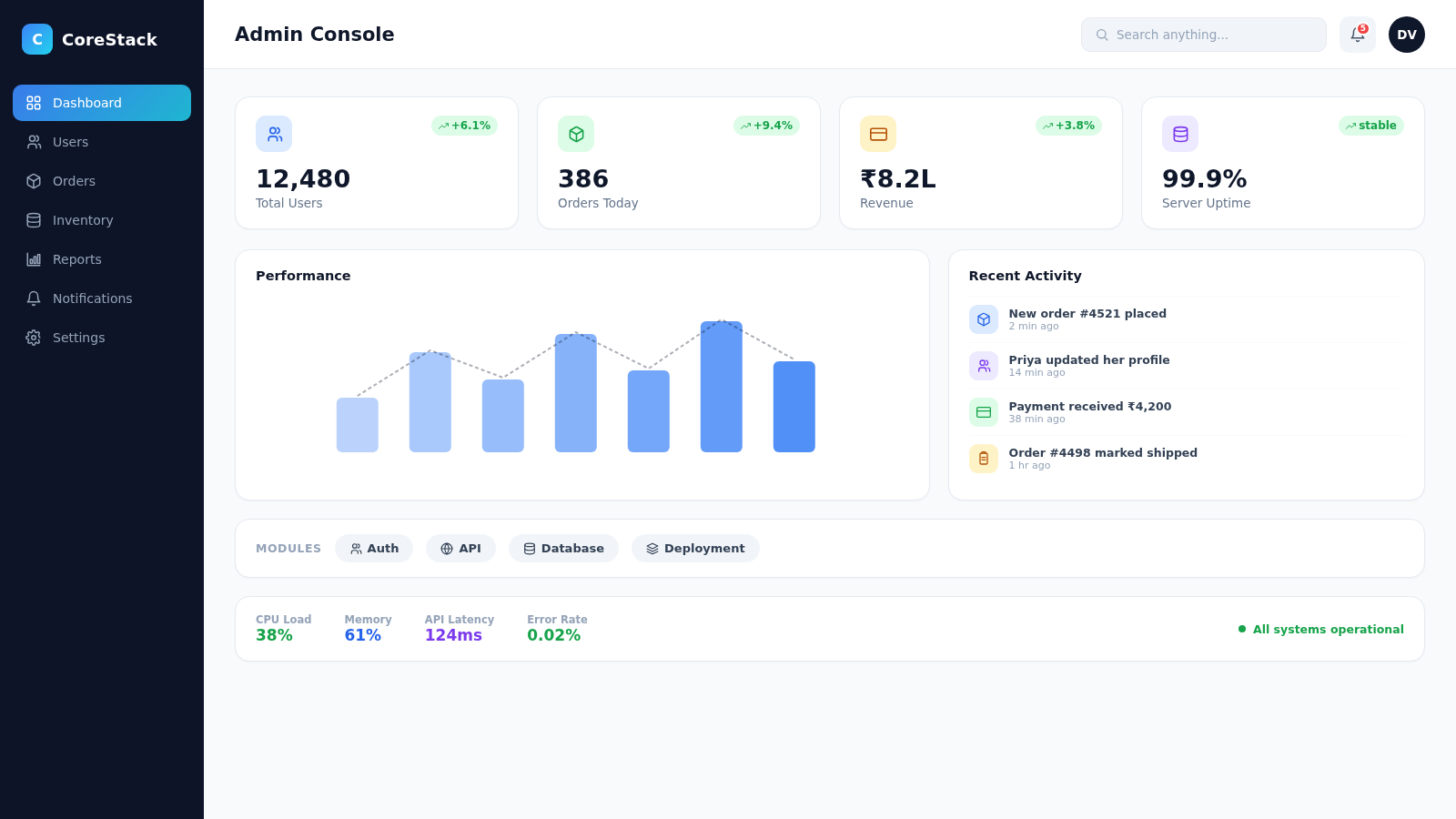
Capstone Project
A complete Full Stack application designed, developed and deployed end-to-end
From Beginner to Job-Ready Developer
Learn
Core concepts across frontend, backend, databases and APIs.
Practice
Coding exercises that reinforce each concept as you go.
Build
Apply what you’ve learned to real application features.
Integrate
Connect frontend, backend and database into one working application.
Deploy
Take an application from development to a live, production environment.
Prepare for Interviews
Practice technical interview questions and coding discussions.
Learn
Core concepts across frontend, backend, databases and APIs.
Practice
Coding exercises that reinforce each concept as you go.
Build
Apply what you’ve learned to real application features.
Integrate
Connect frontend, backend and database into one working application.
Deploy
Take an application from development to a live, production environment.
Prepare for Interviews
Practice technical interview questions and coding discussions.
Who Can Join the Full Stack Developer Course?
Students & Graduates
Build job-ready development skills to start a career in web development.
Working Professionals
Upskill in modern web development alongside your current role.
Career Switchers
Move into software development from a non-technical background.
Existing Developers
Round out frontend-only or backend-only experience with full stack skills.
Entrepreneurs / Founders
Learn to build and maintain your own web applications.
Where Can Full Stack Development Take You?
Skills from this course can help prepare learners for roles such as:
SoftPro9 Full Stack Developer Certification
SoftPro9 Full Stack Developer Certification
On completing the course, you receive a SoftPro9 Full Stack Developer certificate recognizing the skills covered in the curriculum — alongside guidance on relevant industry certifications for the individual technologies you've learned.
Career Support Beyond Training
Resume & Portfolio Guidance
Support in preparing a resume and project portfolio that reflects your full stack skills.
GitHub Guidance
Guidance on presenting your projects and code on GitHub.
Mock Interviews
Practice technical and HR interview rounds before you start applying.
Technical Interview Preparation
Preparation for common full stack developer interview questions and coding rounds.
Job Assistance
Support connecting with hiring opportunities as you complete the course.
Pricing
Investment & Enrollment
One course fee, shown live from our catalogue — no hidden charges.
Course Guide
Build Modern Web Development Skills with Full Stack Training in Bangalore
A full stack developer works across every layer of a web application — the part a user sees and clicks on, the server logic that processes requests, and the database that stores everything in between. Learning full stack development means understanding how these layers connect: how a click in the browser turns into a request, how that request is handled by a backend server, how the server reads or writes data, and how the result finds its way back to the screen. It's a broader skill set than frontend-only or backend-only development — you can build something from idea to working application without waiting on someone else to fill in the missing half.
SoftPro9's Full Stack Developer Course in Bangalore is built around that complete lifecycle. The curriculum starts with the fundamentals of the web — HTML, CSS and JavaScript — before moving into frontend development with React.js, backend development with Node.js and Express.js, and database work with MongoDB. Along the way, it covers the practical tools every working developer relies on: Git and GitHub for version control, REST APIs for connecting frontend and backend, and the basics of deploying an application so it's usable outside a local development environment. Each stage builds on the last, so by the project work later in the course, the individual pieces — markup, styling, logic, data, APIs — start coming together into something that behaves like a real application.
What You Learn in the Full Stack Developer Course
The course is structured in stages, moving from foundational web technologies through to a complete, deployed application.
Frontend Development
Starts with HTML5 and CSS3 — structuring content and styling it across devices — and moves into JavaScript, where static pages start becoming interactive. Learners work with the DOM to update page content dynamically and practice responsive design so a layout adapts sensibly between a phone screen and a desktop monitor.
React Development
Once the JavaScript fundamentals are solid, the course moves into React.js — the library most modern frontend applications are built with. Rather than one long block of HTML, React encourages breaking an interface into reusable components that manage their own state and compose into larger screens.
Backend Development
Covers Node.js and Express.js — building the server side of an application, handling incoming requests, and structuring middleware that sits between a request and its final response. This includes designing REST APIs: the endpoints a frontend calls to fetch or update data.
Database Development
Covers MongoDB together with Mongoose for schema design and data modelling. Learners practice the core CRUD operations — creating, reading, updating and deleting records — and work through structuring a schema that matches how the application will actually use that data.
Development Workflow & Deployment
Builds in the habits that separate a working developer from someone who can only write code in isolation: using Git and GitHub to track changes, debugging systematically, and understanding the basics of taking an application from a local machine to somewhere it can actually be accessed.
Learn Full Stack Development by Building Real Applications
Concepts click once you've used them to build something that has to actually work, where a broken API call or a bad database query shows up immediately as something not working on screen. That's the reasoning behind the project work built into this course: a set of portfolio projects, each designed to put a different combination of skills into practice rather than repeating the same exercise with different names.
The Student Management System (React, Node.js, Express, MongoDB) is a full CRUD application — a structured way to practice creating, reading, updating and deleting records through a real interface. The E-Commerce Application adds authentication, a product catalog, a shopping cart, order handling and REST APIs — the kind of moving parts that force you to think about how features depend on each other. The Learning Management System introduces role-based access, where students and admins see different things and have different permissions, a common real-world requirement tutorials rarely cover properly.
The Job Portal combines authentication with job listings and applications — another multi-role system with its own data relationships to design. The Business Dashboard shifts focus toward consuming and visualizing data through APIs and charts, a different kind of frontend problem than a typical form-based app. Finally, the Capstone Project is a complete full stack application designed, developed and deployed end-to-end — where a learner pulls together everything from earlier in the course into one coherent piece of work that can genuinely sit in a portfolio.
Who Should Learn Full Stack Development?
Full stack development attracts a wide range of learners. Students and recent graduates often use a course like this to build a practical skill set before entering the job market, since a degree alone rarely covers the hands-on tooling — Git, APIs, deployment — that day-to-day development work assumes. Working professionals sometimes take it up alongside their current role, as a structured way to build toward a development career without stepping away first. Career switchers moving from a non-technical background are common too, since full stack development doesn't assume prior specialization the way a narrower course might.
Developers who already know one side of the stack — a frontend developer who's never touched a database, or a backend developer who's avoided React — frequently use a course like this to round out the half they've been missing. For freelancers or founders who want to build or maintain their own applications, understanding the full stack is often what makes that realistic.
There's no strict prerequisite to start, though comfort with basic computer use and a genuine willingness to debug code consistently matters more than any prior credential — the skills build cumulatively, and showing up for the project work usually determines how much a learner actually retains.
Full Stack Training for Learners Across Bangalore
Bangalore's position as one of India's largest technology hubs means the city has no shortage of people looking to build or strengthen development skills — from students near educational institutions to working professionals across the city's IT corridors. SoftPro9's classroom training in Bangalore is built for that in-person, guided-practice style of learning, where an instructor is on hand to walk through a tricky bug or a confusing concept in real time.
For learners who aren't based in Bangalore, or who need more flexibility around a job or existing commitments, the same curriculum is also available through online training, with live instructor-led sessions rather than pre-recorded videos. A hybrid option sits between the two. Whether someone is commuting in from Koramangala or HSR Layout, working out of an office park in Whitefield or Electronic City, or joining online from Jayanagar or Indiranagar, the course structure stays the same — what changes is how a learner chooses to attend it.
Develop End-to-End Applications with the MERN Stack
MERN — MongoDB, Express.js, React.js and Node.js — is one of the most widely used combinations for building modern web applications, largely because every layer is written in JavaScript. A developer moving between frontend and backend code isn't constantly switching languages and mental models, which lowers the friction of working across the full stack.
In practice, a MERN application works like this: a user interacts with a React frontend running in the browser — clicking a button, submitting a form, navigating between views. That interaction triggers a request to an API, handled by a Node.js and Express.js backend, which contains the actual business logic — validating input, checking permissions, deciding what happens next. The backend then reads from or writes to a MongoDB database, which stores data in a flexible, document-based format rather than the rigid tables of a traditional relational database. The result travels back through the API to React, which updates what the user sees. Understanding this full round trip — not just each technology in isolation — is what actually lets a developer debug a real application when something in that chain breaks.
Why a Developer Portfolio Matters
A well-put-together portfolio does something a resume alone can't: it shows working code, not just a description of skills. That usually means GitHub repositories with reasonably organized code, clear commit history, and projects that demonstrate more than a single skill in isolation — a responsive UI, a connected backend, a real database, and evidence that it was actually deployed somewhere.
Structure matters as much as functionality: sensible file organization, consistent naming, and a readable README make a project easier for anyone — a hiring manager, a collaborator, or future-you six months later — to actually understand. Debugging ability shows up here too, since a portfolio that handles errors properly and accounts for edge cases reads very differently from one that only works when everything goes right. None of this guarantees any particular outcome, but a portfolio of genuinely completed, working projects is a more honest signal of ability than claimed familiarity with a list of tools.
Career Paths After Learning Full Stack Development
Full stack skills open up several possible directions, and which one fits best often comes down to individual interest. Some learners lean toward frontend-focused roles, building on the interface and component work from the course. Others gravitate toward the backend side, focused more on APIs, data and server logic than visual interfaces. Many stay generalist and pursue roles that work across both sides as projects require.
These are possible directions based on the skills the course covers, not guarantees of a particular job title, employer, or timeline — outcomes depend on individual effort, the strength of a learner's project work, and the state of the job market, none of which a training course can control on someone's behalf.
Classroom, Online and Hybrid Learning
SoftPro9 offers this course through three formats, and the right one usually depends on logistics as much as learning preference.
Classroom Training
Face-to-face sessions with an instructor and guided, in-person practice — useful for learners who want immediate feedback and a fixed schedule.
Online Training
The same curriculum through live, instructor-led sessions rather than a recorded video course — for anyone outside Bangalore or unable to commit to in-person classes.
Hybrid Learning
A mix of the two, so a learner isn’t locked into one format if their availability changes partway through the course.
Choosing a Full Stack Development Course
Not every full stack course is built the same way. Curriculum depth matters first: does it cover backend and database work in comparable depth to frontend, or is it frontend-heavy with backend added as an afterthought? Project work matters just as much — a course built around a handful of substantial, varied projects generally teaches more than one built around isolated exercises that never connect into something larger.
- Whether Git and GitHub are taught as part of the actual workflow, not just mentioned
- Whether learners work with real APIs, not only mock or static data
- Whether deployment is covered, so a project can be seen live and not just run locally
- Whether instructor sessions are live, so questions get answered in real time
- Whether the learning format — classroom, online, or hybrid — realistically fits your schedule
Why Practical, Project-Based Experience Matters
There's a real difference between watching a tutorial and building something yourself, and it shows up at the moments a tutorial rarely covers: an API call that returns an error instead of expected data, state that doesn't update the way you assumed, a database query returning the wrong records because the schema wasn't designed quite right, a layout that breaks on mobile, or a deployment that works locally but fails once it's pushed live.
Working through those moments — actually debugging them, not just watching someone else solve a pre-selected version of the problem — is where most of the real learning happens. It's exactly what the project work in this course is designed around: the six portfolio projects covered earlier put a learner in front of the same kinds of problems a working developer runs into regularly, in a setting where getting stuck is expected and part of the process.
Start Your Full Stack Developer Learning Journey
Full stack development is a broad, practical skill set — and the most reliable way to build it is by working through real frontend, backend, database and deployment problems, not just reading about them. If the curriculum, project work, and learning formats covered above look like a fit, here's a good next step.
Location
Train in Bangalore with SoftPro9
Classroom training at our Bangalore training centre, live online sessions, or a hybrid of both — with instructor-led practical coding, doubt clearing, project guidance and interview preparation.
Bangalore
SoftPro9 IT Services
22/1, Opp Infosys, BHBCS Layout
BTM Layout 2nd Stage, BTM Layout
Bengaluru, Karnataka - 560076
India
Mon – Fri 9:30 AM – 7:30 PM, Sat 9:30 AM – 3:30 PM
Frequently Asked Questions
What is a Full Stack Developer?
A Full Stack Developer is someone who can work across both the frontend (what users see) and backend (servers, databases and APIs) of a web application, rather than specializing in just one layer.
Is the Full Stack Developer course available in Bangalore?
Yes. SoftPro9 offers Full Stack Developer training in Bangalore through classroom, online and hybrid learning modes.
Can beginners join the course?
Yes. The course is structured to take learners from web development fundamentals through to advanced, real-world full stack projects.
What technologies will I learn?
HTML5, CSS3, JavaScript, React.js, Node.js, Express.js, MongoDB, REST APIs, Git & GitHub, authentication, and deployment — see the full curriculum below.
Is classroom training available in Bangalore?
Yes, classroom training is available at our Bangalore training centre, in addition to online and hybrid options.
Is online training available?
Yes. The course can be taken fully online, in classroom, or as a hybrid of both.
Will I work on real projects?
Yes. The course includes hands-on projects and a capstone project built end-to-end, in addition to coding exercises.
Is interview preparation included?
Yes, the course includes preparation for technical interviews and coding discussions.
Is job assistance available?
Yes, SoftPro9 provides career support including resume guidance, portfolio guidance and job assistance after course completion.
Will I receive a certificate?
Yes, you receive a SoftPro9 Full Stack Developer certificate on completing the course.
How long is the course?
The Full Stack Developer course runs for 4–6 months, depending on your chosen learning pace and mode.
What is the fee for the Full Stack Developer course?
Course fees are shown in Indian Rupees (plus GST) above — select "International (USD)" in the pricing section for international pricing.
Ready to Become a Full Stack Developer?
Build practical development skills with SoftPro9.