🔍 Are You Missing Customers Without Marketing Automation?
In today's competitive digital world, attracting customers is only the first step toward business growth. Converting those visitors into qualified leads, loyal customers, and repeat buyers requires consistent communication, timely follow-ups, and a well-planned marketing strategy.
But what happens when a potential customer visits your website, downloads your brochure, fills out a contact form, or shows interest in your services—and nobody follows up at the right time?
You could be losing valuable business opportunities without even realizing it.
Many businesses still depend on manual emails, spreadsheets, repetitive follow-up calls, and disconnected marketing tools to manage customer interactions. While these methods may work initially, they become inefficient as your business grows.
Marketing automation helps you connect with the right audience, deliver personalized messages, nurture leads, and improve your chances of converting prospects into customers—all with less repetitive manual work.
If your business is struggling to manage leads, maintain consistent engagement, or measure marketing performance, it may be time to explore marketing automation.
What Is Marketing Automation?
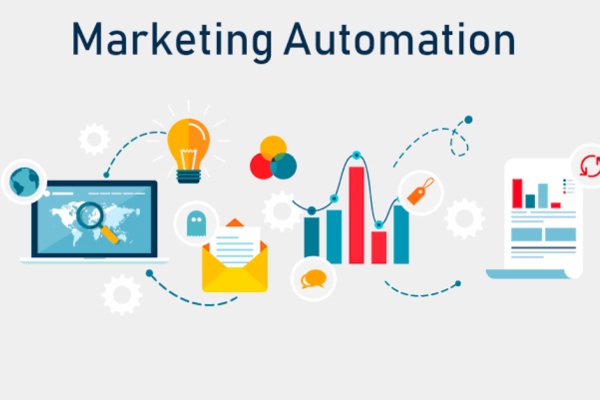
Marketing automation is the use of software and technology to automate repetitive marketing activities, manage customer interactions, and deliver relevant communications based on customer behavior.
Instead of manually sending every email, tracking every lead, or remembering every follow-up, businesses can create automated workflows that perform these tasks according to predefined rules and customer actions.
Marketing automation can support activities such as:
- Automated email campaigns and follow-up sequences
- Lead capture through websites and landing pages
- Customer segmentation and personalized messaging
- Lead nurturing based on customer interests
- CRM integration and lead management
- WhatsApp or SMS communications through supported platforms and consent-based workflows
- Customer re-engagement campaigns
- Marketing campaign tracking and reporting
For example, when someone submits an inquiry form on your website, an automation workflow can send an acknowledgment email, notify your sales team, assign the lead to the appropriate representative, and schedule a follow-up reminder.
This creates a more organized customer journey and reduces the risk of inquiries being overlooked.
1. Are You Losing Leads Because of Delayed Follow-Ups?
One of the biggest challenges businesses face is responding to customer inquiries quickly and consistently.
Imagine a potential customer visits your website and requests information about your services. They are interested, comparing providers, and ready to learn more. However, your team is busy handling other tasks, and the inquiry remains unanswered for several hours—or even days.
During that time, the prospect may contact a competitor who responds sooner.
Marketing automation can help prevent these missed opportunities by triggering immediate responses when customers take specific actions.
With an automated lead management workflow, your business can:
- Send an instant acknowledgment after a customer submits a form.
- Notify the appropriate sales representative.
- Assign leads based on service requirements or location.
- Schedule follow-up reminders.
- Send relevant information to prospects who need more time to decide.
The benefit: Your team can respond more consistently, prioritize promising leads, and spend less time managing repetitive administrative tasks.
2. Are Potential Customers Visiting Your Website but Not Converting?
Website traffic does not automatically translate into sales.
Visitors may explore your services, read your blog posts, check your pricing, or browse your training programs without completing an inquiry form or making a purchase.
Without a strategy to guide these visitors toward the next step, your business may miss opportunities to build relationships with interested prospects.
Marketing automation helps businesses create structured customer journeys using landing pages, forms, email sequences, and targeted calls to action.
For example, a visitor interested in digital marketing training could receive an invitation to download a course brochure. After submitting their details, they could receive course information, details about the curriculum, and an invitation to speak with a counselor.
Similarly, a business exploring SAP consulting services could receive relevant information about implementation, support, or managed services based on the inquiry they submitted.
These interactions provide useful information and encourage prospects to take the next step without overwhelming them with irrelevant messages.
3. Are You Sending the Same Message to Every Customer?
Every customer has different needs, preferences, challenges, and purchasing intentions.
A person exploring your services for the first time may need educational content. Someone requesting a quotation may need pricing information. An existing customer may be more interested in ongoing support or complementary services.
Sending the same generic message to everyone can make your marketing less relevant.
Marketing automation enables customer segmentation based on factors such as:
- Services or products viewed
- Previous inquiries and interactions
- Customer lifecycle stage
- Communication preferences
- Purchase history, where applicable
- Content downloads and campaign engagement
Based on these segments, businesses can deliver more relevant messages to different audiences.
For example, an organization interested in SAP implementation services may receive information about implementation planning, system integration, and project support. A prospect interested in full-stack development training may receive course details, learning outcomes, and enrollment information instead.
Personalized communication helps your audience receive information that is more closely aligned with their interests and needs.
4. Are Your Sales and Marketing Teams Working with Disconnected Data?
When marketing and sales teams use separate spreadsheets, email platforms, and lead databases, customer information can become fragmented.
This can result in duplicate follow-ups, incomplete records, missed sales opportunities, and confusion about who is responsible for contacting a prospect.
Marketing automation integrated with a customer relationship management (CRM) system can help centralize lead information and improve coordination between teams.
Depending on the platform and integration, your business can:
- Capture leads from multiple marketing channels.
- Store customer interactions in a central system.
- Assign leads to the appropriate sales team.
- Track follow-up activities and lead status.
- Trigger notifications when prospects show interest.
- Monitor movement through the sales pipeline.
A more connected process allows sales representatives to understand the context behind an inquiry before contacting a potential customer.
It also helps managers evaluate campaign performance and identify areas where leads are getting stuck.
5. Are You Spending Too Much Time on Repetitive Marketing Tasks?
Marketing teams often spend significant time on routine activities, including sending emails, updating records, scheduling follow-ups, preparing reports, and organizing customer lists.
Although these tasks are necessary, performing them manually can limit the time available for strategy, creative work, and customer engagement.
Marketing automation can streamline many of these repetitive processes.
Common examples include:
Automated welcome emails: Send an introductory message when someone subscribes or submits a form.
Lead nurturing sequences: Share useful content over time with prospects who are not yet ready to buy.
Campaign scheduling: Plan and schedule eligible marketing communications in advance.
Lead notifications: Alert the relevant team when a new inquiry arrives.
Customer re-engagement: Identify eligible inactive contacts and send relevant, permission-based communications.
Performance reporting: Collect available campaign metrics to support analysis and decision-making.
Automation does not eliminate the need for human involvement. Instead, it helps your team focus on activities that require judgment, creativity, relationship-building, and expertise.
6. Are You Missing Opportunities to Nurture Leads?
Not every prospect is ready to purchase immediately.
Some customers need to compare options, discuss decisions internally, understand pricing, or learn more about your offerings before committing.
If your business contacts a lead only once, you may lose the opportunity to build a relationship with someone who could become a customer later.
Lead nurturing helps maintain communication throughout the decision-making process.
A well-designed automated nurturing campaign may include:
- An initial acknowledgment or welcome message.
- Educational content addressing the prospect's needs.
- Relevant service information or a case study.
- Answers to common questions or objections.
- An invitation to schedule a consultation or request a quotation.
The content and timing should reflect the prospect's interests and engagement, rather than sending an excessive number of messages.
For example, a company exploring digital transformation services might receive educational content about process improvement, implementation considerations, and ongoing technical support.
Over time, this approach can help your business establish credibility and make it easier for interested prospects to take the next step.
7. Are You Struggling to Measure Your Marketing Results?
Running marketing campaigns without reliable performance tracking makes it difficult to determine what is working.
You may know how many emails were sent or how much website traffic you received, but do you know which campaigns generate qualified leads, consultations, and sales?
Marketing automation platforms can provide reporting and analytics that help businesses evaluate their marketing activities.
Depending on the tools and tracking configuration, you may be able to monitor:
- Email delivery and engagement
- Website form submissions
- Landing-page conversion rates
- Lead sources and campaign attribution
- Lead-to-customer conversion rates
- Campaign-generated opportunities
- Customer acquisition costs, when reliable cost data is available
- Revenue associated with marketing campaigns, when attribution data supports it
These insights help businesses identify high-performing campaigns, improve underperforming workflows, and allocate resources more effectively.
It is important to measure meaningful business outcomes rather than relying exclusively on vanity metrics such as impressions or email opens.
8. Can Marketing Automation Help You Retain Existing Customers?
Customer acquisition is important, but maintaining relationships with existing customers can also support long-term business growth.
Without a structured communication process, businesses may miss opportunities to reconnect with previous customers, share relevant updates, request feedback, or introduce complementary services.
Marketing automation can support customer retention through workflows such as:
- Onboarding emails for new customers
- Service updates and educational resources
- Feedback and satisfaction surveys
- Renewal reminders where appropriate
- Relevant product or service recommendations
- Re-engagement campaigns for eligible contacts
- Follow-up communications after service delivery
For example, a customer who has completed a training program may appreciate information about advanced courses. A business using managed IT services may benefit from relevant service updates and scheduled account communications.
These interactions should be useful, timely, and aligned with customer preferences.
The goal is not simply to send more messages. It is to create better customer experiences and strengthen relationships over time.
How Does Marketing Automation Work?
A typical marketing automation workflow follows a simple process:
Step 1: Attract potential customers
Use search engine optimization (SEO), digital advertising, social media, content marketing, and other suitable channels to attract your target audience.
Step 2: Capture leads
Invite interested visitors to complete a form, subscribe to updates, download a resource, or request a consultation.
Step 3: Organize and segment contacts
Store relevant information in your marketing platform or CRM and group contacts according to their needs, interests, and engagement.
Step 4: Trigger automated communications
Set up workflows based on events such as form submissions, subscriptions, or other supported customer actions.
Step 5: Nurture and qualify leads
Provide relevant information and identify prospects who may be ready for a sales conversation.
Step 6: Connect with your sales team
Route qualified inquiries to the appropriate representative and maintain visibility into follow-up activities.
Step 7: Analyze and optimize
Review campaign performance, identify bottlenecks, and improve messaging, timing, and workflow design.
The result is a more structured marketing process that connects customer acquisition, lead nurturing, sales follow-up, and performance measurement.
Which Businesses Can Benefit from Marketing Automation?
Marketing automation can support organizations across industries, particularly those that generate leads, maintain ongoing customer relationships, or manage multi-step sales processes.
IT and software companies: Automate demo requests, lead nurturing, product updates, and sales notifications.
Digital marketing agencies: Manage inquiries, consultation bookings, campaign follow-ups, and client onboarding.
Training institutes: Respond to course inquiries, share brochures, provide enrollment information, and follow up with prospective learners.
B2B service providers: Nurture long sales cycles with educational content, consultation invitations, and relevant service updates.
E-commerce businesses: Support abandoned-cart recovery, purchase confirmations, product recommendations, and post-purchase engagement where supported and appropriately consented.
Consulting and professional services: Organize consultation requests, segment prospects, and maintain communication throughout the decision-making process.
Whether your business is a startup, growing company, training institute, or established enterprise, the right automation strategy depends on your audience, marketing goals, existing systems, and available resources.
Essential Features to Look for in a Marketing Automation Platform
Choosing the right platform is an important part of building an effective automation strategy.
Before selecting a solution, evaluate the following features:
- Lead capture and management: Collect and organize inquiries from relevant channels.
- Email marketing automation: Create personalized, scheduled, and trigger-based campaigns.
- CRM integration: Connect marketing activities with sales records and customer information.
- Workflow builder: Create automated journeys using rules, conditions, and customer actions.
- Segmentation and personalization: Deliver relevant content to different audience groups.
- Analytics and reporting: Monitor campaign engagement, conversions, and business outcomes.
- Integration capabilities: Connect with your website, forms, analytics tools, and other systems.
- Privacy and consent management: Support appropriate permissions, unsubscribe handling, and applicable data-protection requirements.
- Scalability: Choose tools that can accommodate your expected growth and operational complexity.
Popular platforms include HubSpot, Salesforce Marketing Cloud, ActiveCampaign, Mailchimp, and other solutions designed for different business needs and budgets.
The best platform is not necessarily the one with the most features. It is the one that fits your workflow, integrates with your existing systems, and supports your business objectives.
Common Marketing Automation Mistakes to Avoid
Although automation can improve efficiency, poorly designed workflows can create a frustrating customer experience.
Avoid these common mistakes:
1. Automating without a clear strategy
Define your marketing goals before building workflows. Decide whether you want to improve lead response times, increase qualified inquiries, improve customer retention, or achieve another measurable outcome.
2. Sending too many messages
Excessive communication can lead to unsubscribes and reduced engagement. Establish sensible frequency limits and respect customer preferences.
3. Ignoring personalization
Use relevant information to tailor messages instead of sending identical content to every contact.
4. Neglecting data quality
Incorrect email addresses, duplicate contacts, outdated records, and inconsistent CRM data can undermine campaign performance.
5. Forgetting human follow-up
Automation should support your sales and service teams, not replace human interaction when customers need expert guidance.
6. Failing to test workflows
Test forms, triggers, email links, contact assignments, and reporting before launching campaigns.
7. Overlooking privacy and consent
Follow applicable data-protection rules, collect only necessary information, and ensure that communications respect consent and opt-out preferences.
8. Focusing on activity instead of outcomes
Measure qualified leads, conversions, sales opportunities, and customer retention—not just the number of automated messages sent.
How to Get Started with Marketing Automation
You do not need to automate every marketing activity at once. Starting with a focused, measurable workflow can make implementation more manageable.
Here is a practical approach:
Step 1: Identify your biggest marketing challenge.
Determine whether your business is losing opportunities because of delayed responses, inconsistent follow-ups, poor segmentation, or limited reporting.
Step 2: Map your customer journey.
Understand how prospects discover your business, submit inquiries, evaluate your services, and become customers.
Step 3: Select one high-value workflow.
Start with an automated inquiry acknowledgment, a lead assignment process, or a simple email nurturing sequence.
Step 4: Choose suitable tools.
Evaluate your current CRM, email platform, website forms, integration requirements, and budget before purchasing new software.
Step 5: Define success metrics.
Track indicators such as response time, qualified lead rate, appointment bookings, conversion rate, and campaign-attributed opportunities.
Step 6: Test, learn, and improve.
Review results regularly and adjust your workflow based on customer behavior and measurable outcomes.
Step 7: Expand gradually.
Once the first workflow performs reliably, introduce additional automations where they solve a genuine business problem.
A focused implementation is often more effective than creating numerous complicated workflows without a clear purpose.
Why Marketing Automation Matters for Business Growth
Marketing automation is not simply about saving time. It helps businesses create a more consistent, measurable, and customer-focused marketing process.
When implemented effectively, it can help organizations:
- Respond to inquiries more consistently.
- Reduce repetitive administrative work.
- Improve lead organization and sales coordination.
- Deliver relevant information at appropriate stages.
- Identify opportunities for campaign optimization.
- Maintain relationships with existing customers.
- Support growth without relying entirely on manual processes.
However, results depend on the quality of your strategy, your audience, your content, your data, and your team's ability to act on the opportunities automation identifies.
Automation cannot compensate for an unclear value proposition or an unsuitable product. It works best when it supports a strong marketing strategy and a useful customer experience.
Conclusion: Stop Losing Opportunities and Start Automating Smarter
Every inquiry represents a potential opportunity to build a customer relationship. When leads go unanswered, follow-ups are forgotten, or marketing messages fail to reach the right audience, your business may lose opportunities that could have been nurtured into valuable relationships.
Marketing automation gives your business the tools to manage these interactions more systematically, communicate more consistently, and understand which marketing activities contribute to your goals.
You do not need to transform your entire marketing operation overnight. Start by identifying where prospects are falling through the cracks, select a suitable automation solution, and build a workflow that addresses that specific problem.
With the right strategy, marketing automation can help your team spend less time on repetitive tasks and more time creating value for customers.
Explore Our Courses
Ready to master the skills discussed in this article? Check out our comprehensive course programs designed by industry experts.
Browse Courses →Explore Our Services
Looking to implement these concepts in your organization? Our services team can help you achieve your business goals.
View Services →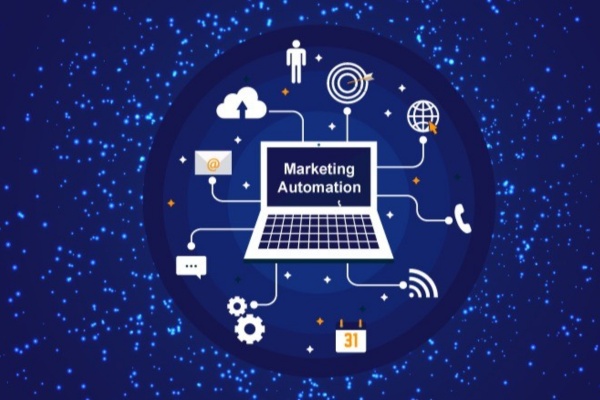




Comments
No comments yet. Be the first to comment!