❓ Why Should Every Marketer Learn Generative AI?
The digital marketing industry is evolving rapidly, and Generative AI is becoming one of the most important technologies shaping its future. From creating engaging social media content to developing marketing campaigns, analyzing customer behavior, and generating creative ideas, AI is transforming the way marketers work.
Today, businesses expect marketers to deliver high-quality content, improve customer engagement, understand market trends, and achieve better results in less time. Traditional marketing methods alone may not be enough to meet these growing expectations. This is where Generative AI makes a difference.
Learning Generative AI is no longer just an additional skill for marketers. It is becoming an essential part of modern digital marketing. Whether you are a beginner, digital marketing professional, content creator, social media manager, or business owner, understanding AI can help you stay competitive and improve your marketing performance.
What Is Generative AI?
Generative AI is a type of artificial intelligence that can create new content based on user instructions and available data. It can generate text, images, videos, audio, presentations, ideas, and other creative materials.
Unlike traditional software that follows predefined instructions, Generative AI can understand prompts and produce different types of outputs based on the user's requirements.
Some popular Generative AI tools include:
- ChatGPT: Helps create blog articles, marketing copy, email campaigns, and content ideas.
- Google Gemini: Supports research, brainstorming, content creation, and productivity.
- Microsoft Copilot: Helps with content creation, productivity, and marketing tasks.
- Canva AI: Supports graphic design, social media creatives, and presentations.
- Adobe Firefly: Helps generate and edit creative visual content.
- Jasper AI: Supports marketing content creation and brand communication.
- Runway: Helps create and edit AI-generated videos.
These tools allow marketers to simplify their daily activities and explore new creative possibilities.
1. Create Marketing Content Faster
Content creation is one of the most time-consuming activities in digital marketing. Marketers regularly need to develop blog posts, website content, social media captions, advertisements, email newsletters, and promotional materials.
Generative AI helps speed up this process by providing content suggestions, writing drafts, improving sentences, and generating creative ideas.
For example, marketers can use AI to:
- Generate blog topic ideas.
- Write social media captions.
- Create engaging product descriptions.
- Prepare email marketing content.
- Develop website landing-page content.
- Generate advertising headlines.
- Create content calendars.
AI-generated content should always be reviewed and edited to ensure accuracy, originality, brand consistency, and audience relevance.
2. Improve Social Media Marketing
Social media platforms are important channels for building brand awareness, attracting customers, and increasing engagement. However, maintaining consistent content across multiple platforms requires creativity and planning.
Generative AI makes social media marketing easier by helping marketers create platform-specific content.
With AI tools, marketers can:
- Generate Instagram captions and hashtags.
- Create Facebook promotional posts.
- Develop LinkedIn content.
- Generate YouTube video descriptions.
- Prepare social media content calendars.
- Brainstorm campaign ideas.
- Create visual concepts for promotional designs.
For example, a marketer promoting a new training program can use Generative AI to create multiple caption ideas, promotional messages, and campaign concepts for different social media platforms.
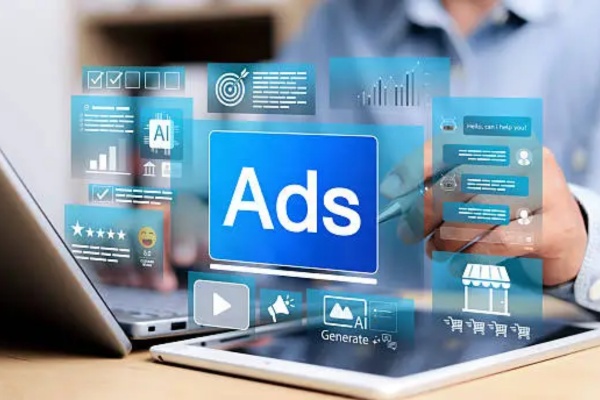
3. Develop Creative Advertising Campaigns
Creating successful advertising campaigns requires strong ideas, attractive messaging, and a clear understanding of the target audience.
Generative AI helps marketers brainstorm advertising concepts and develop different versions of promotional content.
It can assist with:
- Google Ads headline suggestions.
- Facebook and Instagram ad copy.
- Promotional slogans and taglines.
- Product advertising descriptions.
- Campaign themes and creative ideas.
- Call-to-action suggestions.
- Different versions of advertising messages.
Marketers can experiment with different messaging approaches and refine their campaigns based on audience response and performance data.
4. Personalize Customer Experiences
Modern customers expect personalized communication rather than generic marketing messages. Businesses need to understand customer interests, preferences, and purchasing behavior to deliver relevant experiences.
Generative AI can support personalized marketing by helping marketers develop content for different audience segments.
For example:
- Personalized email subject lines.
- Product recommendations.
- Customized promotional messages.
- Audience-specific landing-page content.
- Personalized customer communication.
- Tailored marketing campaign ideas.
When combined with reliable customer data and appropriate privacy practices, AI can help businesses create more relevant customer experiences.
5. Improve SEO and Content Marketing
Search Engine Optimization (SEO) plays an important role in increasing website visibility and attracting organic traffic.
Generative AI can support several SEO activities by helping marketers research topics, organize content, and improve website communication.
Important SEO activities supported by AI include:
- Keyword research and topic brainstorming.
- SEO-friendly blog title suggestions.
- Meta title and description drafts.
- Blog outline generation.
- Content optimization ideas.
- FAQ generation.
- Search intent analysis.
- Content gap identification.
However, AI-generated content alone does not guarantee higher search rankings. Marketers must focus on helpful information, search intent, expertise, originality, and user experience.
6. Save Time Through Marketing Automation
Marketing professionals often manage repetitive tasks such as preparing email campaigns, scheduling content, responding to customer inquiries, and organizing marketing information.
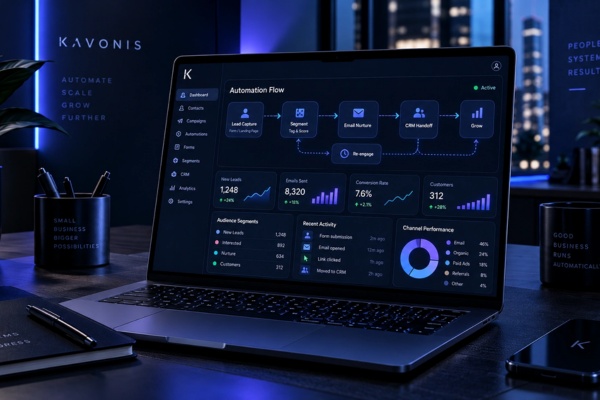
Generative AI, combined with automation platforms, can help reduce repetitive work and improve productivity.
Some practical applications include:
- Drafting automated email responses.
- Creating follow-up message templates.
- Generating campaign reports.
- Preparing customer support responses.
- Developing automated content workflows.
- Organizing marketing ideas and tasks.
- Supporting lead-nurturing communication.
This allows marketers to spend more time on planning, strategy, creativity, and customer relationships.
7. Understand Customer Behavior and Marketing Trends
Understanding customer behavior is essential for creating effective marketing strategies. Marketers need to analyze campaign performance, identify customer interests, and understand changing market trends.
AI-powered tools can help summarize information, identify patterns, and organize marketing insights from available data.
Marketers can use AI to:
- Summarize customer feedback.
- Analyze survey responses.
- Identify frequently asked questions.
- Organize campaign performance information.
- Discover potential audience interests.
- Compare marketing campaign results.
- Generate ideas based on market research.
AI can support decision-making, but marketers should verify important insights using reliable data rather than depending entirely on AI-generated conclusions.
8. Generate Images and Creative Marketing Designs
Visual content plays a major role in digital marketing. Attractive graphics, banners, advertisements, and promotional images can help businesses communicate their messages effectively.
Generative AI image tools make it easier to explore creative concepts without starting every design from scratch.
Marketers can use AI-powered design tools to:
- Generate promotional image concepts.
- Create social media design ideas.
- Develop advertising visuals.
- Prepare website banner concepts.
- Generate presentation graphics.
- Explore different creative styles.
- Create visual concepts for product promotions.
Tools such as Canva AI and Adobe Firefly help marketers explore new design possibilities and improve their creative workflow.
9. Improve Email Marketing Campaigns
Email marketing remains an effective way to communicate with customers, promote products, share updates, and nurture leads.
Generative AI can help marketers prepare engaging email campaigns with relevant messaging.
It can assist with:
- Writing email subject lines.
- Creating promotional email drafts.
- Developing welcome email sequences.
- Preparing product announcement emails.
- Creating customer follow-up messages.
- Generating newsletter content.
- Improving email calls to action.
Marketers can also experiment with different email versions and use campaign analytics to understand which messages perform better.
10. Stay Competitive in the Digital Marketing Industry
The marketing industry continues to evolve with new technologies, platforms, and customer expectations. Professionals who understand emerging technologies can adapt more effectively to industry changes.
Learning Generative AI helps marketers build modern skills that complement traditional marketing knowledge.
Some valuable skills include:
- AI-powered content creation.
- AI-assisted SEO.
- Prompt engineering.
- AI-based social media marketing.
- Generative AI for advertising.
- AI-assisted data analysis.
- Marketing automation.
- AI-powered creative design.
Combining these skills with communication, creativity, strategic thinking, and analytical abilities can help marketers become more effective professionals.
How to Start Learning Generative AI for Marketing
You do not need advanced programming knowledge to begin learning Generative AI for digital marketing. A basic understanding of marketing concepts and a willingness to experiment with AI tools are good starting points.
Follow these steps to develop your skills:
Step 1: Understand AI Fundamentals
Learn what Artificial Intelligence, Machine Learning, and Generative AI mean and how they are used in marketing.
Step 2: Explore Popular AI Tools
Start experimenting with tools such as ChatGPT, Gemini, Canva AI, and other marketing-focused platforms.
Step 3: Learn Prompt Engineering
Understand how to write clear and effective prompts to generate useful marketing content, ideas, and creative outputs.
Step 4: Practice Content Creation
Create blog posts, social media captions, email campaigns, advertising headlines, and promotional messages using AI assistance.
Step 5: Learn AI-Powered SEO
Explore keyword research, content optimization, search intent, and AI-assisted SEO workflows.
Step 6: Work on Real-Time Marketing Projects
Practice developing complete marketing campaigns for different products, services, or business industries.
Step 7: Evaluate and Improve Your Results
Review AI-generated content, verify facts, analyze campaign performance, and improve your marketing strategies.
Challenges and Limitations of Generative AI in Marketing
Although Generative AI offers many advantages, marketers should also understand its limitations.
Some important challenges include:
- Incorrect Information: AI tools may sometimes generate inaccurate or misleading information.
- Lack of Originality: AI-generated content may sound generic without proper editing and creative input.
- Data Privacy: Marketers must avoid sharing confidential customer or business information with tools that are not approved for such use.
- Brand Consistency: AI-generated messages need human review to match the company's tone and identity.
- Copyright Concerns: Marketers should understand the usage rights and licensing conditions of AI-generated content and source materials.
- Overdependence on AI: Depending entirely on AI can reduce original thinking and strategic creativity.
The best approach is to use Generative AI as a supportive marketing assistant while keeping human creativity, judgment, and expertise at the center of every campaign.
Career Opportunities for Marketers with Generative AI Skills
As businesses increasingly explore AI-powered marketing solutions, professionals with a combination of digital marketing and AI knowledge can pursue various career opportunities.
Some potential career roles include:
- Digital Marketing Executive
- AI Marketing Specialist
- Content Marketing Specialist
- SEO Specialist
- Social Media Marketing Manager
- Performance Marketing Executive
- Marketing Automation Specialist
- AI Content Strategist
- Digital Marketing Analyst
- Marketing Campaign Manager
The exact skills and experience required will vary depending on the organization and job role. Learning Generative AI alongside SEO, social media marketing, advertising, analytics, and marketing automation can help professionals prepare for evolving career requirements.
Why Businesses Need Marketers Who Understand Generative AI
Businesses are looking for smarter ways to reach customers, improve marketing efficiency, and build stronger brand identities.
Professionals who understand how to use Generative AI can contribute to several business activities, including content planning, campaign development, customer communication, creative production, and marketing analysis.
AI knowledge can help businesses:
- Develop marketing content more efficiently.
- Explore new campaign ideas.
- Improve customer communication.
- Support personalized marketing.
- Simplify repetitive marketing tasks.
- Discover new content opportunities.
- Make better use of marketing data.
However, successful marketing still depends on understanding customers, creating meaningful experiences, and developing effective strategies.
Future of Generative AI in Digital Marketing
The future of digital marketing will increasingly involve collaboration between human marketers and AI-powered technologies.
Generative AI is expected to continue influencing content creation, customer engagement, advertising, personalization, marketing analytics, and automation.
As these technologies develop, marketers will need to understand how to use AI responsibly and effectively.
Professionals who combine marketing fundamentals with AI knowledge, creative thinking, and data-driven decision-making will be better prepared to adapt to changing industry expectations.
Rather than replacing the need for skilled marketers, Generative AI is changing the way marketing professionals approach their work and solve business challenges.
Conclusion
Generative AI is transforming the digital marketing landscape by making content creation, campaign planning, customer communication, SEO, and creative production more efficient.
Learning Generative AI is an important step for marketers who want to improve their skills, explore new opportunities, and stay updated with modern marketing technologies.
Whether you are a student planning a career in digital marketing, a working professional looking to upgrade your skills, or a business owner interested in improving marketing performance, understanding Generative AI can give you valuable knowledge for the future.
Explore Our Courses
Ready to master the skills discussed in this article? Check out our comprehensive course programs designed by industry experts.
Browse Courses →Explore Our Services
Looking to implement these concepts in your organization? Our services team can help you achieve your business goals.
View Services →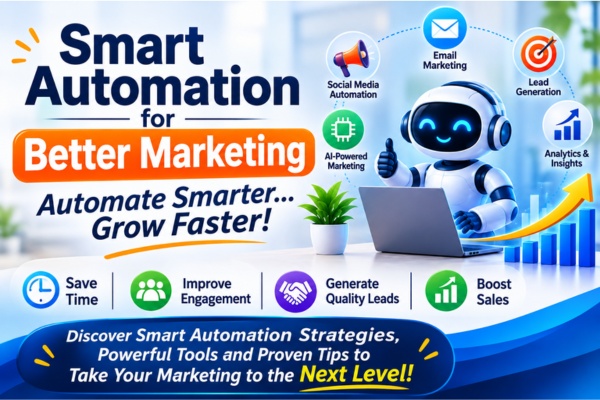


Comments
No comments yet. Be the first to comment!